Stages of a Single-Family Home Design Project: What Really Happens
A year and a half usually passes between your first meeting with an architect and moving in. Here is what actually happens in between, stage by stage, with realistic timelines and the spots where delays like to hide.

Between your first meeting with an architect and the day you move in, a year and a half usually passes. Sometimes two years. Most people building a house know they need an architect, yet few know what actually fills those months, or what exactly they are paying for. So here is the process as it works in a Polish design office, with realistic timelines and the places where delays like to hide.
In short
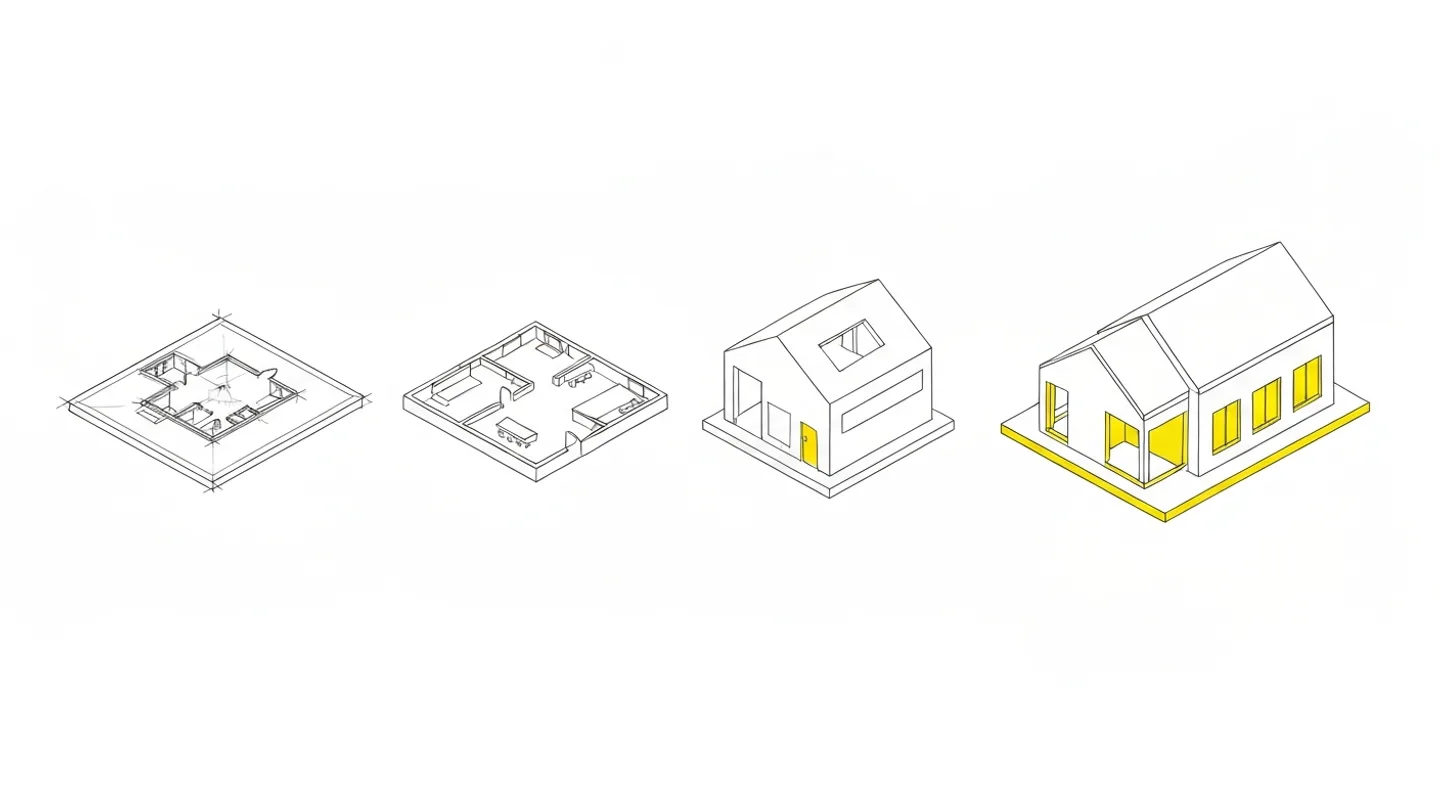
- Six stages: concept, building permit design, the permit, execution design, author’s supervision and final approval. Together one to two years.
- Changes are almost free only at concept stage. The same comment at execution design stage means weeks of rework and a separate line on the invoice.
- The authority has 65 days to issue the permit, but every request for supplements stops that clock.
- The execution design is not mandatory for a single-family house, and skipping it usually costs you during finishing works.
Stage 1: site analysis and concept
MPZP or WZ: what your plot allows
Before anyone draws a single line, the architect checks what you are allowed to build on your plot. If the land is covered by a local zoning plan (MPZP), that plan dictates things like maximum building height, roof pitch and how much of the plot you can cover. No zoning plan? Then you apply for individual planning conditions (WZ), and here your luck depends on the municipality. Some issue them in six weeks. Others take half a year.
From conversations to concept variants
Then come the conversations. A good architect asks less about the number of rooms and more about how you live. Who gets up first in the morning? Does anyone work from home, will the kids stay long-term, do you throw a party for thirty people once a year?
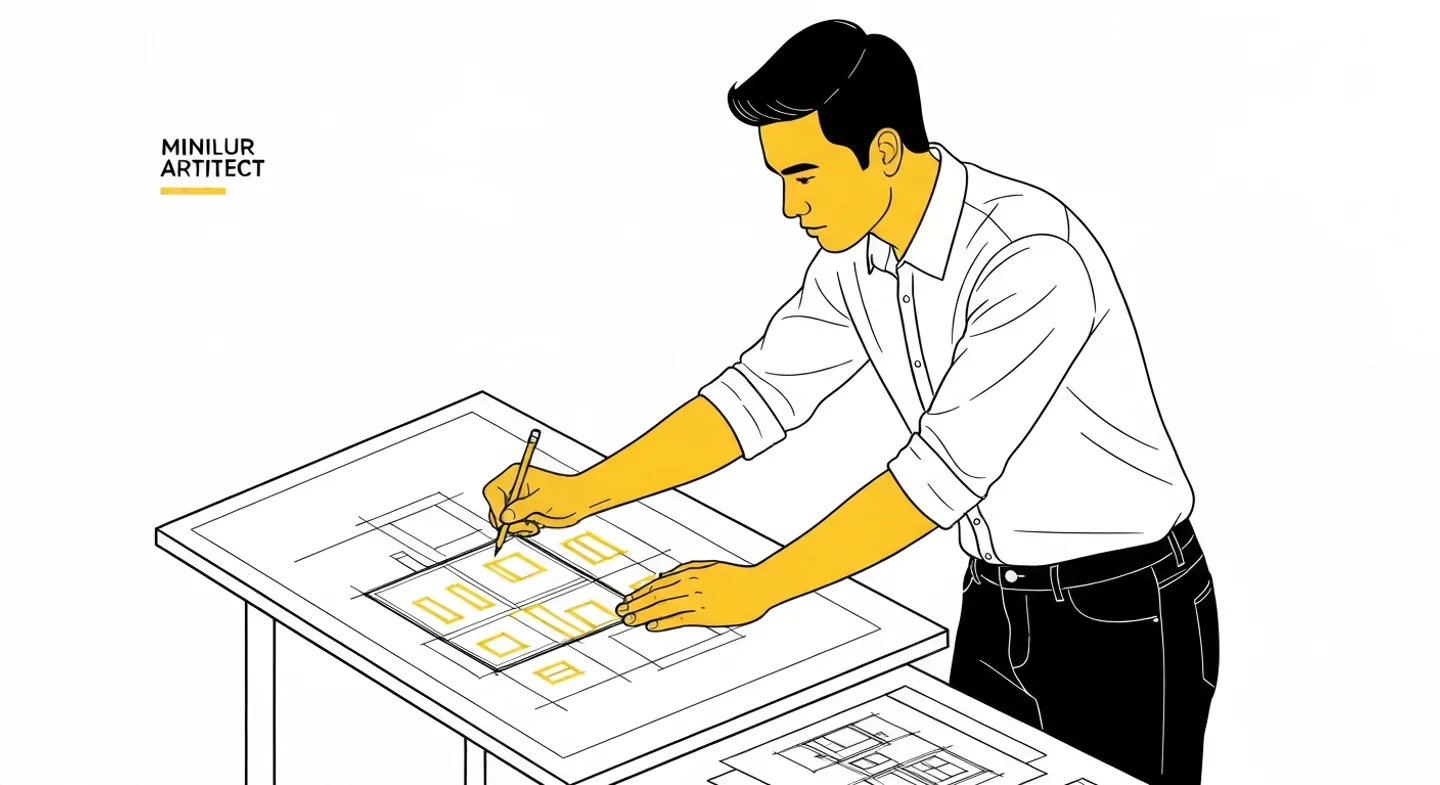
Based on this you receive two or three concept variants: floor plans, the building’s massing, sometimes a simple 3D model.
This stage takes three to six weeks and it is the only moment when changes cost almost nothing. If the north-facing kitchen bothers you, say so now.
A comment made at concept stage is a five-minute conversation. The same comment made at execution design stage means weeks of rework and a separate line on your invoice.
Stage 2: building permit design
The chosen variant goes into detailed development. The building permit design (Polish: projekt budowlany) is a formal document, and since the 2021 reform it consists of three parts:
- the site development plan,
- the architectural and construction design,
- the technical design.
In practice this means a structural engineer and installation designers join the architect’s work.
Expect six to ten weeks. Along the way, things surface that force corrections:
- a geotechnical report,
- connection conditions from the power or water utility,
- a zoning clause that allowed several interpretations at concept stage and now allows only one.
You have every right to ask for each change to be explained in plain language. Use that right.
Stage 3: the building permit and the 65-day clock
The documentation goes to the county office or city hall. By law the authority has 65 days to issue a decision. In practice I have seen three weeks and I have seen four months. The biggest time sink is requests for supplements, because each one stops the statutory clock until the gaps are filled.
Your role at this stage is small. You wait. The one thing worth arranging is information flow: agree with your architect that you hear about every letter from the office within a few days, not a month later in passing. It sounds trivial, but this is the stage where investors most often lose trust in their office. Not because of the delay itself, but because of the silence.
Stage 4: execution design
The permit arrives and in theory you could start digging. Except the permit design is a document for the authorities, not for the crew. So the architect prepares the execution design (projekt wykonawczy):
- larger-scale drawings,
- construction details,
- material schedules,
- the layout of every socket and light point,
- the heating system.
This is the stage of your decisions, and there are surprisingly many. Underfloor heating or radiators. Where the washing machine goes and where the dryer goes. Which windows get external blinds.
Four to eight weeks of intense email exchange, and every decision made now is cheap, because it exists only on paper.
Can you skip the execution design?
Worth knowing: for a single-family house, Polish law does not require an execution design, and some investors skip it to save a few thousand zloty. From what I have seen, that saving is an illusion. A crew building without details fills the gaps their own way, and you pay for their creativity later, usually during finishing works, when something misses by three centimetres.
Stage 5: author’s supervision during construction
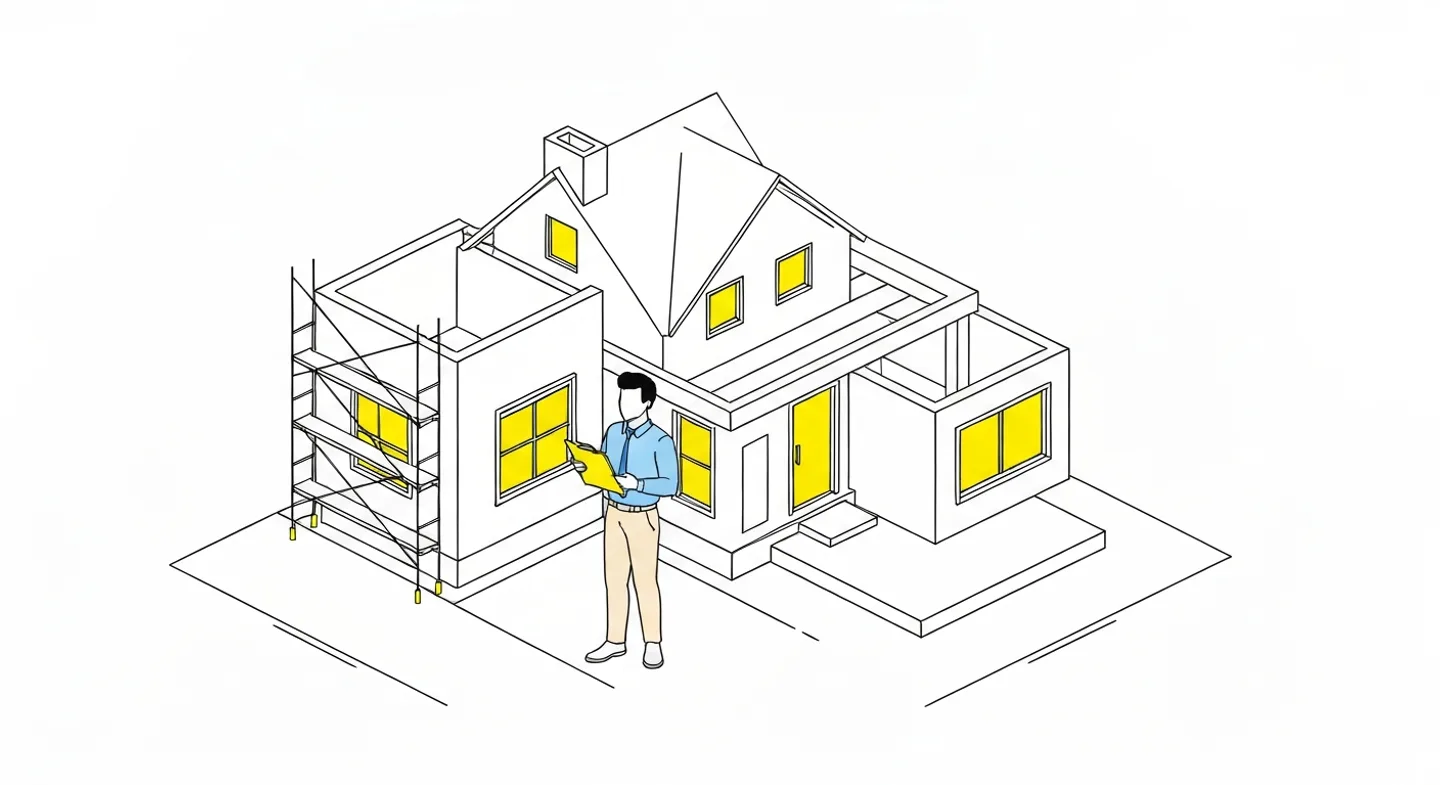
Construction starts, but the architect stays involved. Under author’s supervision (nadzór autorski) they visit the site every two to four weeks, more often during foundations and structural work. They answer the contractor’s questions, approve or reject material substitutions, and check that what is being built matches what was drawn.
One scene plays out on almost every site sooner or later: the crew foreman says “we’ll do this a bit differently, it’ll be cheaper”. He might be right, genuinely. But before you agree, ask the architect one question. Some of these improvements end as a thermal bridge in a wall, or as an awkward conversation with the building inspector at final approval.
Stage 6: completion and final approval
When the works finish, you assemble the as-built documentation:
- the construction log,
- the site manager’s declaration,
- the as-built geodetic survey,
- test reports for utility connections.
You notify the building control authority that construction is complete, and if they raise no objection within 14 days, you can legally move in. The architect helps pull the paperwork together; with complete documents this stage closes in two to four weeks.
How to keep track of all this
The whole process spans one to two years, dozens of emails, a dozen drawing revisions and decisions scattered across many months. After half a year, nobody remembers which email settled the ceiling height in the living room.
| Stage | What is produced | How long |
|---|---|---|
| 1. Concept | MPZP/WZ analysis, two or three variants | 3–6 weeks |
| 2. Building permit design | site development plan, architectural and construction design, technical design | 6–10 weeks |
| 3. Building permit | the authority’s decision | 65 days by law, 3 weeks to 4 months in practice |
| 4. Execution design | details, schedules, services | 4–8 weeks |
| 5. Author’s supervision | site visits | throughout construction, every 2–4 weeks |
| 6. Final approval | as-built documentation, notice to building control | 2–4 weeks, plus 14 days for objections |
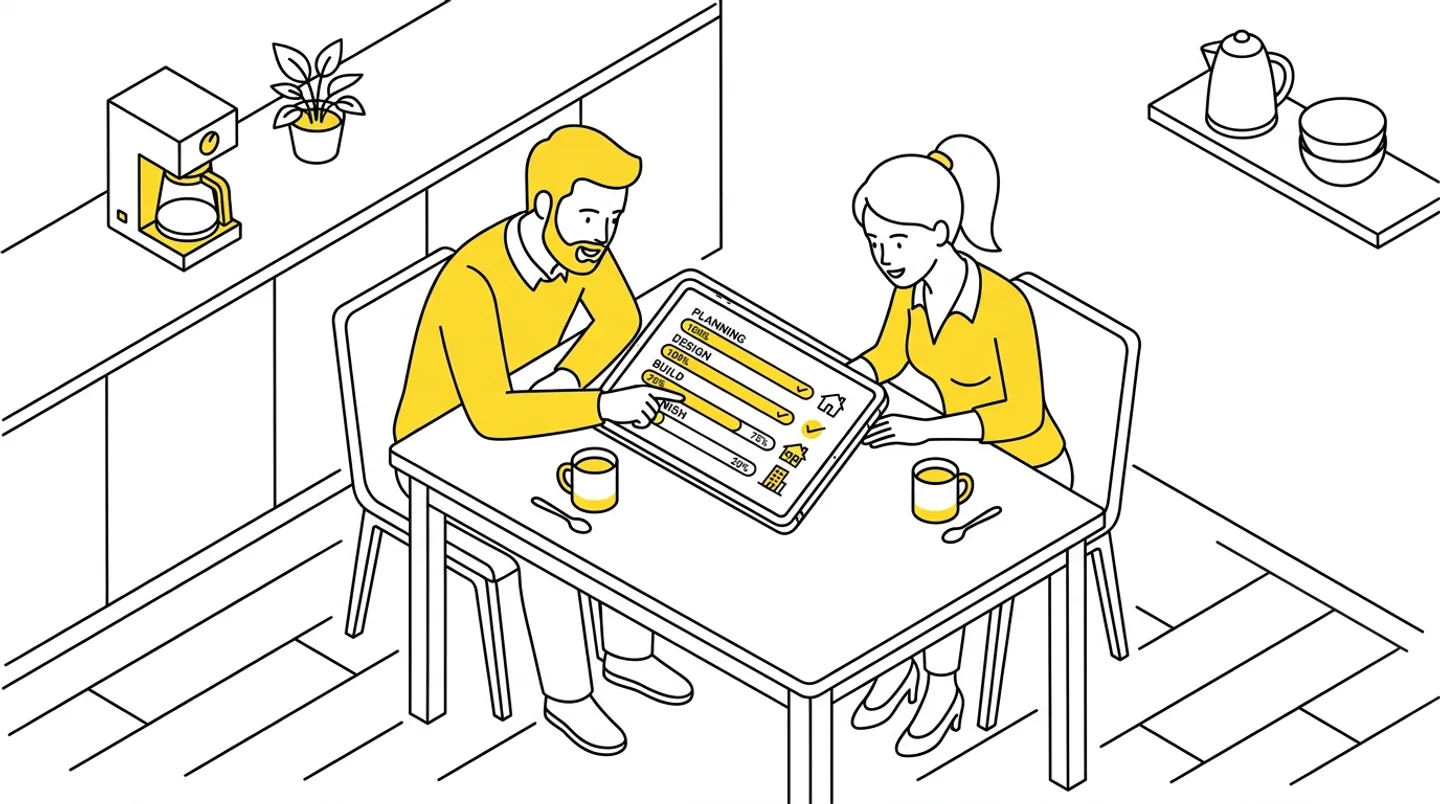
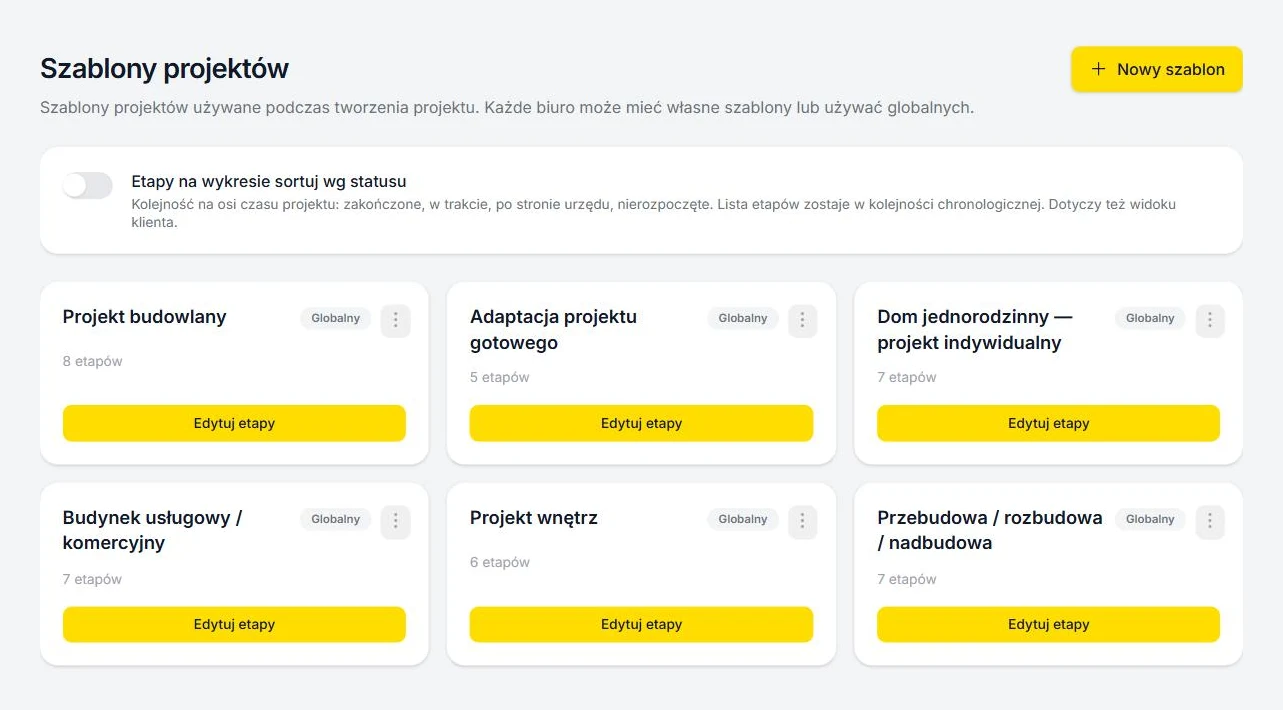
Some offices solve this with tools like ArchiFlow. You get a single link, and that is enough (an account with a password or Google is optional, if you want one), and you can see at any moment which stage the project is at, which documents are ready and what is happening with the permit application. Instead of calling to ask how things are going, you just look.
If you are still choosing an office, ask two questions at the first meeting: how will I be kept informed about progress, and who handles contact with the authorities? The answers will tell you more about the future collaboration than most portfolios.
ArchiFlow gives investors real-time visibility into project progress — through one link from the office, with a login if they want one. Ask your architectural office if they use ArchiFlow.
Learn more →