How to Track Your Home Construction Without Micromanaging
The project has started, the deposit is paid, and then the updates stop coming. You don't have to choose between calling every day and waiting in the dark. A few ground rules, agreed early, do the job.

Building a house has a strange rhythm. For the first two weeks everything happens at once: the contract, the deposit, first sketches, a flood of questions. Then it goes quiet.
Your architect is “working on it”, whatever that means. You call, no answer. You email, and three days later you get two sentences back. A week on, you ask again, slightly embarrassed to be that client.
I’ve heard this exact story from dozens of homeowners. And in almost every case there was no bad faith involved. What was missing was a system.
In short
- Silence from the studio almost never means bad faith; what is usually missing is a system for keeping you informed.
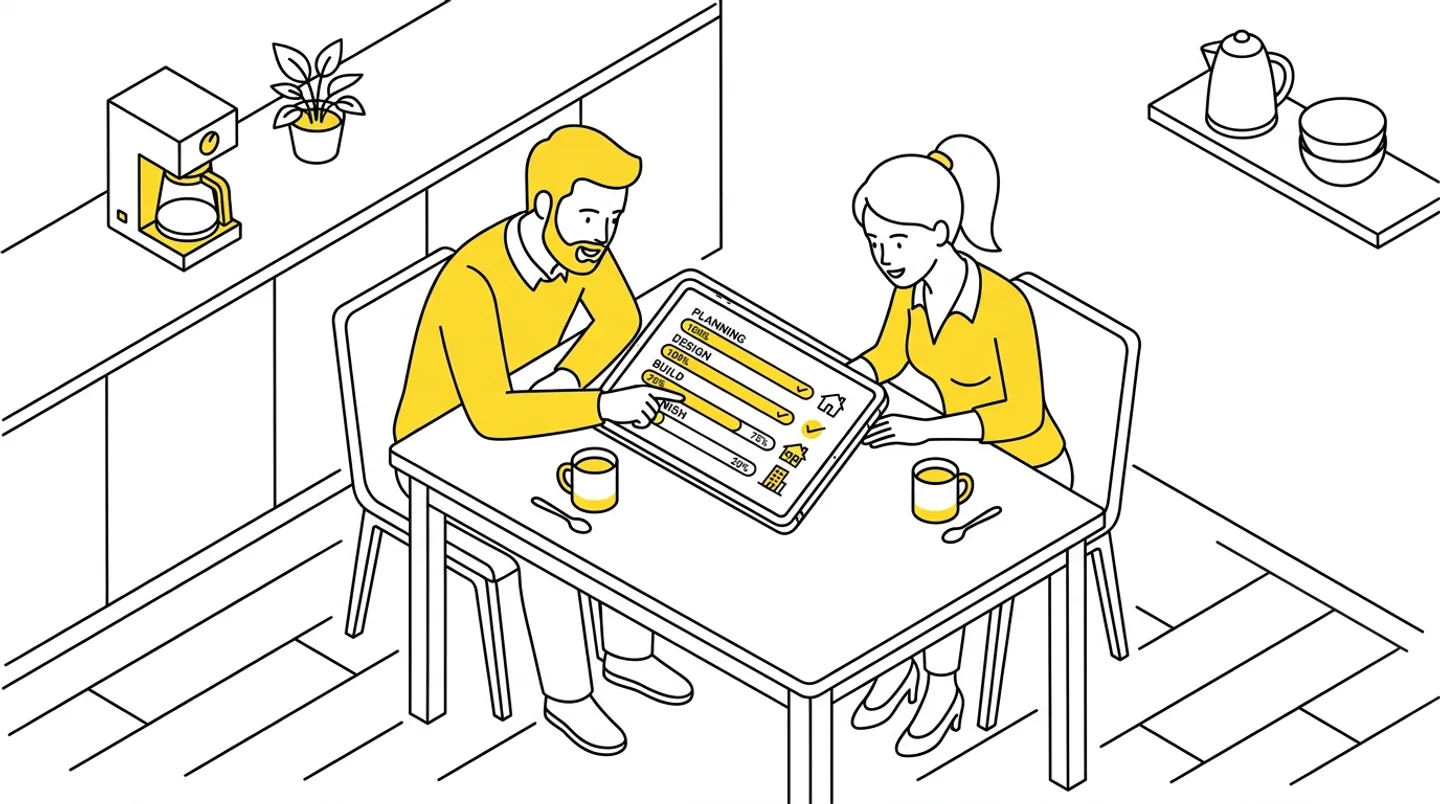
- You only ever need to know three things: the stage, the status, and what is waiting on you.
- Agree at the start on a short status email every two weeks, one home for all documents, and decisions in writing.
- Visit the site every four to six weeks or at milestones.
Why the silence hurts
For most people, a house is the largest single purchase of their life. Design plus construction can easily swallow 700,000 or 800,000 zlotys, often more. Two weeks with zero information about an investment that size is stressful for anyone, even when everything behind the scenes is going exactly to plan.
Meanwhile the architect is simply doing the work. Drawing, calculating, waiting on an engineer’s sign-off or a response from the permit office. From their side of the desk, nothing has changed, so there is nothing to report.
From your side, something ominous must be happening, because silence always sounds like trouble. That gap in perspective causes more friction between homeowners and design studios than design errors and money combined.
The three things you always need to know
Here’s the good news: the list of information you genuinely need is short.
- Stage — concept, building permit design, application under review, detailed design, construction
- Status — on track, delayed, or a problem waiting on your decision
- Your court — which decisions or documents the architect needs from you right now
If you can answer those three questions, you are in control of the project. Everything else, from insulation thickness to concrete class, is the work you’re paying professionals to handle.
Set the rules at the first meeting
The best time to organise communication is before you sign the contract, while both sides are still courting each other.
A fixed update rhythm
Ask for a fixed update rhythm. A short status email every two weeks is plenty: one paragraph, five minutes of writing. Most architects agree without hesitation, because one planned email beats five anxious phone calls.
One home for all documents
The second thing is documents. Drawings, the contract, official decisions, site reports, all of it should land in one place you can access. Google Drive, Dropbox, the studio’s own portal, whatever works. Anywhere but your inbox, because you can always find a year-old attachment eventually, just never at the moment you actually need it.
Decisions in writing
Third: decisions in writing. When the architect asks you to choose windows or approve moving a wall, reply by email rather than by phone. (Yes, a call is quicker. But two years later, in a dispute, nobody remembers calls.) A written confirmation protects you, and it protects the architect too.
What not to do
Don’t call every day to ask how it’s going. Those calls interrupt the work and teach you nothing, because between Tuesday and Wednesday nothing in a building design usually changes. You agreed on an update rhythm, so hold both sides to it.
Don’t go around your architect when talking to the builders. The classic scenario runs like this: the site foreman says “I’d do this differently”, the owner nods along, and a wall ends up half a metre from where it was drawn. Later it turns out a ventilation duct was supposed to run through that wall. Every change goes through the design and through the designer, even when it looks trivial.
And don’t assume silence means nothing is moving. An architect can spend a week deep in calculations, or waiting on an approval with no news worth sharing. If you’re unsure, ask directly for a status instead of building theories.
A client portal instead of an email chain
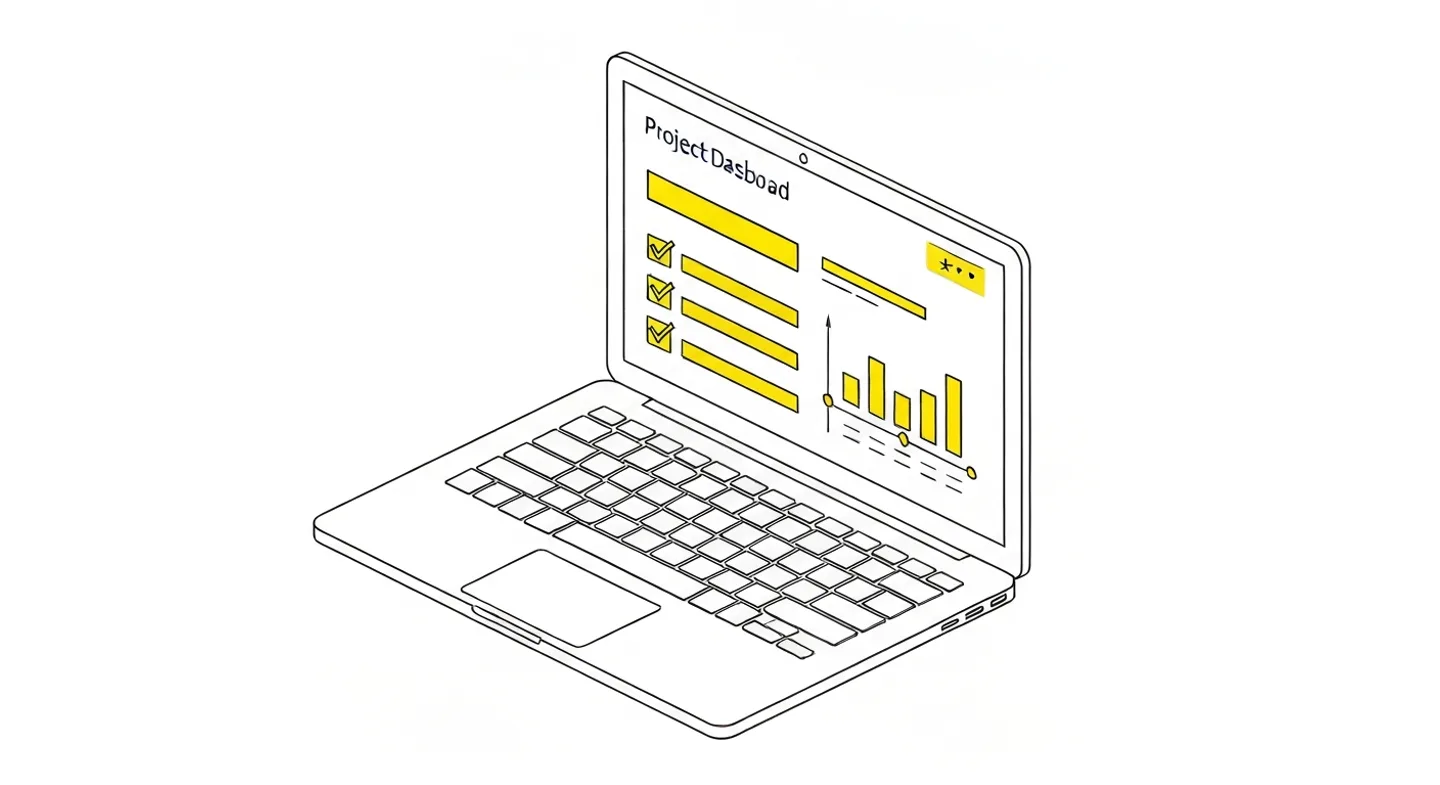
More and more studios now give homeowners a live view of the project online. You get a link, open it on your phone, and see:
- the current stage,
- what’s finished and what’s in progress,
- which documents are ready to download,
- a message window straight to the studio.
The link alone is enough to open it, with no app to install. An account, with a password or a Google login, is optional if you want one.
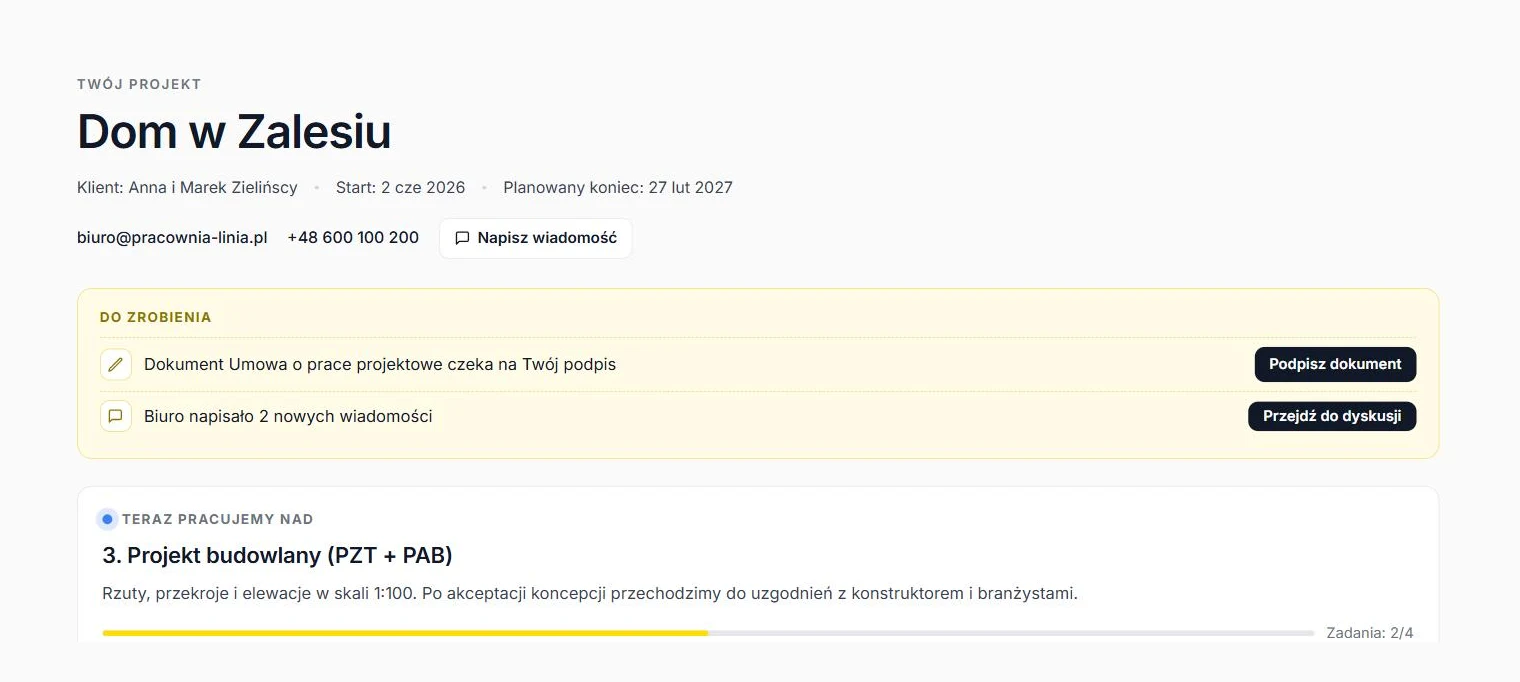
The difference is noticeable within the first week. Instead of writing “any word from the permit office?”, you check the link and know. Your actual questions to the studio get reserved for things that need a real conversation. If your architect doesn’t use anything like this yet, it’s worth asking. Tools like ArchiFlow were built for exactly this situation.

Site visits: less often, but smarter
Once work starts, a good rhythm is a visit every four to six weeks or at milestones: after the foundations, after the structural shell, after the building is closed in. Arrange it in advance, ideally so the architect or site manager is there to walk you through.
Don’t try to judge technical quality on your own, because without preparation you are more likely to miss the mark than to catch a real problem. Pay attention to the things you can verify:
- whether the stage matches what you were told,
- whether the site looks under control,
- whether you see materials you don’t recognise from the drawings.
Something bothers you? Take a photo and send it to the architect with a specific question. Ask, don’t accuse; nine times out of ten there is a simple explanation.
When something does go wrong
Delays happen. The permit office requests corrections, an engineer takes longer than promised, the soil survey turns up a surprise. The delay itself is rarely the problem. Finding out about it after the fact, when nothing can be rearranged anymore, is. A good architect tells you about a problem the day they learn about it themselves.
If you’ve gone a long stretch without knowing what’s happening and the status emails have dried up, ask for a status meeting. Half an hour once a month, in person or online, with a simple agenda: where are we, what’s next, what do you need from me. In well-run projects this meeting is routine, not a sign of crisis.
A practical habit: after any conversation where decisions were made, send the architect a two-sentence email saying “confirming what we agreed: X”. It takes a minute and keeps the project history cleaner than most tools do.
Staying in control of your build doesn’t require understanding every technical detail. It requires being able to answer three questions at any moment: which stage, what status, what’s waiting on me. Set that up at the start and you’ll sleep better for the next two years.
ArchiFlow gives investors real-time visibility into project progress — through one link from the office, with a login if they want one. Ask your architectural office if they use ArchiFlow.
Learn more →