Author's Supervision in Practice — How to Price and Document Site Visits
Author's supervision may be the most commonly given-away service in Polish design studios: unlimited site visits 'included' in the fee, decisions made on site with no paper trail. It can be structured properly. Here's how.

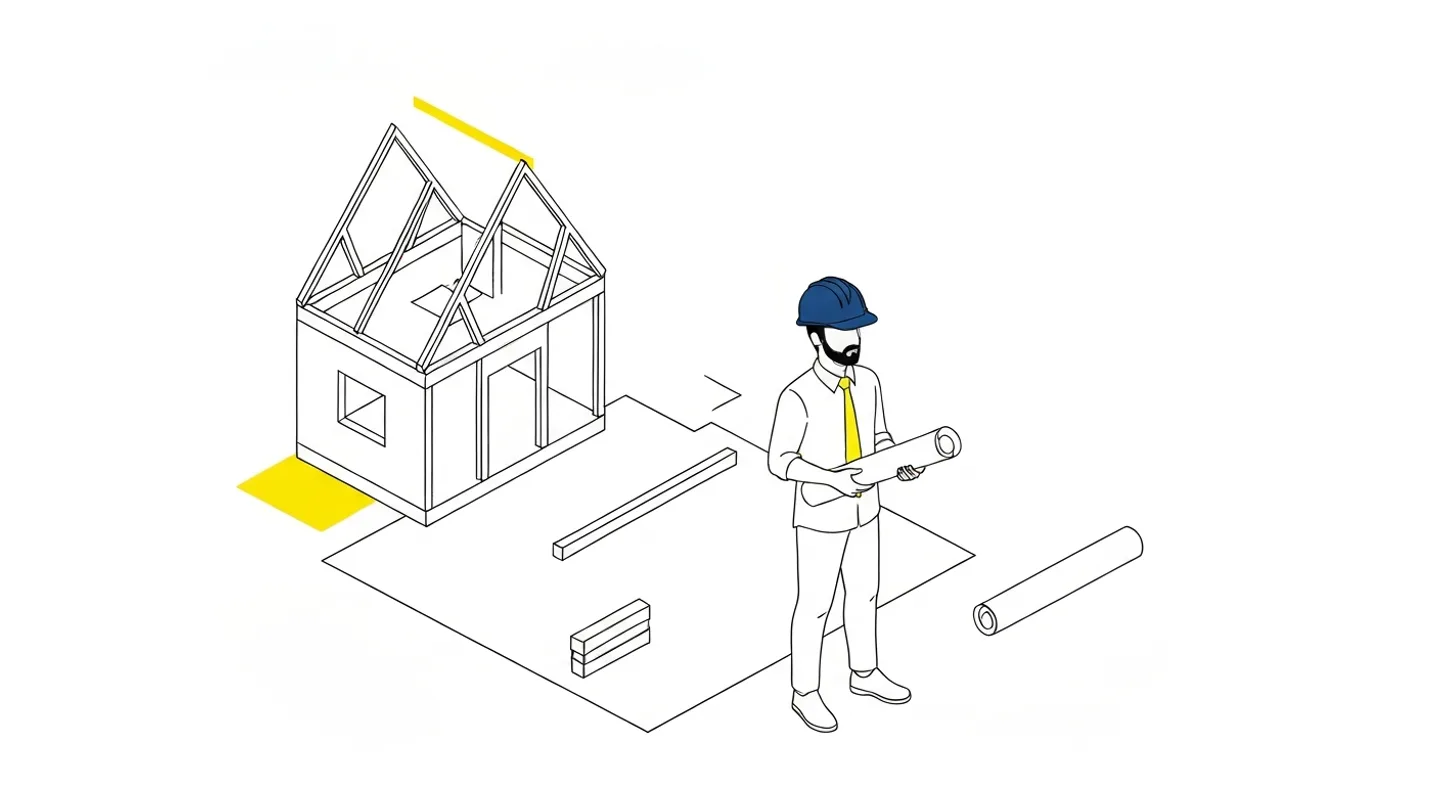
In many offices, author’s supervision is a ghost service. Everyone provides it, few price it, almost nobody documents it. The result always looks the same: the architect drives to the site for a year and a half “as part of the design fee,” and every visit takes half a day away from work someone is actually paying for.
Do the math. Twenty visits at four hours each, travel included, is two and a half working weeks. Unpaid.
In short
- Polish construction law limits author’s supervision to checking compliance with the design and agreeing substitute solutions; everything else is a separately paid service.
- Supervision is the design author’s right and obligation; the client cannot hand it to another architect without your consent.
- Price it separately from the design; the fairest model is a per-visit rate (400–900 zł for single-family houses) plus an hourly rate for desk work.
- Email a note to the client and contractor within a day of every visit; a substitute solution exists only once it is agreed in writing.
What author’s supervision is, and what it isn’t
Polish construction law defines author’s supervision quite narrowly: checking that construction follows the design, and agreeing on substitute solutions when they come up. That is a definition of duties, not a free construction hotline.
Author’s supervision is not:
- weekly site presence “so the client feels safe,”
- settling disputes between the client and the contractor,
- fixing workmanship defects,
- advising on bathroom tiles.
You can provide all of that, and sometimes it’s worth providing, but as separately paid services, named in the contract, not by silent default.
One thing many designers forget: under Polish law, author’s supervision is the design author’s right and obligation. The client cannot hand it to another architect without your consent. That is a strong negotiating card. If you are the only person who can provide the service, there is no reason for it to be a freebie.
Three pricing models
Lump sum for the whole build
Easiest to sell, riskiest to deliver. A house build can take two years instead of one, and the number of visits depends on a contractor you have zero influence over. If you do go lump sum, cap the number of visits and set a time horizon. Past either limit, you return to the money conversation.
Per-visit rate
In my view the fairest model for both sides. The price covers travel, time on site, and a written note of what was agreed; for single-family houses, rates in the range of 400–900 zł per visit are common, depending on region and distance. Add an hourly rate for desk work: analysing substitutes, revised drawings.
The downside is that the client can’t predict the total cost. You soften that with a min–max estimate of visits written into the contract.
Monthly retainer for the construction period
A fixed fee for availability plus a defined pool of visits and consultations per month. Works well on larger projects and with clients who prefer a predictable budget over the lowest price.
| Model | What it covers | Risk and fit |
|---|---|---|
| Lump sum for the whole build | one fee for the entire construction period, with a cap on visits and a time horizon | easiest to sell, riskiest to deliver: a build can take two years instead of one |
| Per-visit rate | travel, time on site and a written note; 400–900 zł per visit for single-family houses, plus an hourly rate for desk work | fairest for both sides; total cost is unpredictable, softened by a min–max estimate of visits in the contract |
| Monthly retainer | a fixed fee for availability plus a pool of visits and consultations per month | larger projects and clients who prefer a predictable budget |
Which model to pick matters less than it seems. What matters is that supervision is priced separately from the design: its own contract line or its own agreement. Thrown in “for free,” it stops being a service and becomes an obligation without limits.
Documentation is half the value
A decision made on site and written down nowhere does not exist. Every visit should produce a short note:
- date and who attended,
- what was checked,
- what was agreed,
- which substitutes were approved,
- what awaits the client’s decision and by when.
Fifteen minutes of writing. Email it to the client and the contractor within a day, with a deadline for objections. No objections means acceptance.
Why the bureaucracy? Three reasons:
- Professional liability: in a defect dispute, the notes decide what was agreed versus what the contractor did on their own.
- Billability: a dated list of visits is an invoice nobody argues with.
- Memory: on a two-year build, nobody, you included, remembers what was agreed in month three.
If you run projects in a tool with a timeline and messages pinned to stages, like ArchiFlow, supervision notes have a natural home: attached to the construction stage, dated, visible to the client. The client sees what they are paying for, and you have complete documentation in one place instead of scattered across an inbox.
Substitute solutions: in writing or not at all
The biggest supervision risk is substitutes “agreed” verbally. The classic scenario: the contractor proposes a different material because it’s “the same thing, just cheaper,” the client nods, the architect doesn’t object. A year later the substitute fails to meet requirements, and all three people remember that conversation differently. Guess whose signature sits on the design.
One rule, and I know of no exceptions to it: a substitute solution exists from the moment it is agreed in writing. Email counts. The agreement also states who bears the cost of the change. Everything before that was a non-binding chat next to the cement mixer.
Where to start
You don’t have to rebuild your price list overnight. In your next new contract, list supervision as a separate item, priced per visit, with a min–max estimate of visit numbers. Start writing notes after every visit, even on old projects. The habit sticks after three or four times.
After a year, compare supervision revenue against the time it consumes. In most studios this is the first item that turns from a hidden cost into a normally paid service. And it usually happens without a single hard conversation with a client, because a specific contract clause defends itself.
ArchiFlow gives investors real-time visibility into project progress — through one link from the office, with a login if they want one. Ask your architectural office if they use ArchiFlow.
Learn more →